
The Cu Chi Tunnels in Vietnam are a fascinating 200 km system of underground tunnels. You can visit Cu Chi from Ho Chi Minh City on a day tour. Setting off in a comfortable minibus, we left Ho Chi Minh on a full-day tour to explore the famous battlegrounds of the Vietnam War.
Our tour was spent at the tunnels and ended at the War Remnants Museum. If you are interested at all in the history of Vietnam and the Vietnam War, this is a must add to your Ho Chi Minh City or Vietnam itinerary.
Table of Contents
Cu Chi Tunnels Vietnam
Remember all those old war movies that you watched where the US soldier ran after a rebel in the jungle only to have him disappear in plain sight? How did the Vietnamese soldier be so clever? Well, a visit to the Cu Chi tunnels explains all that.
It was a masterful tunnel system built right under the noses of the US army. The American’s knew the tunnels were there somewhere they just couldn’t find them. But not for lack of trying.
Bombing with Napalm and Agent Orange
Agent Orange, napalm, and constant bombing of the jungle were used to try to find the tunnel system that had eluded them. The jungle was completely wiped out and barren during the Vietnam War. It had been ruined by man, but Mother Nature’s is strong and today it is lush and green.
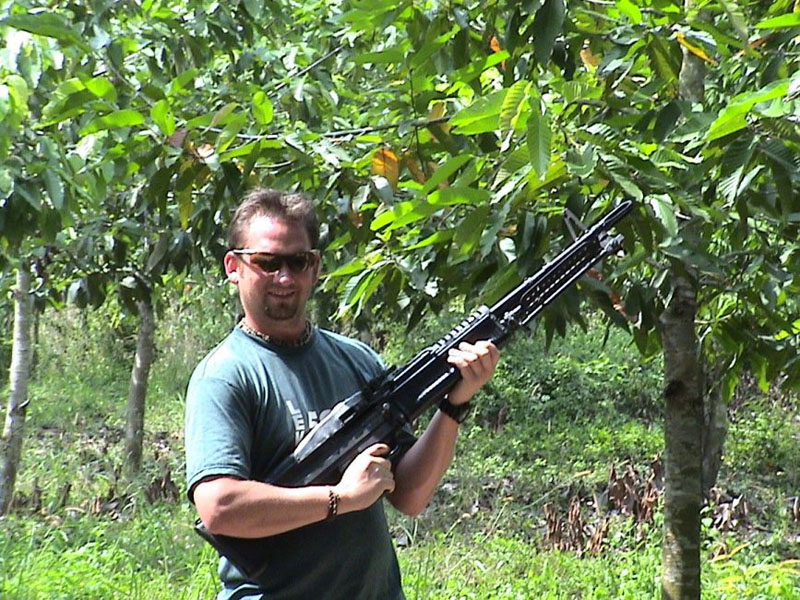
Book these highly rated Cu Chi Tunnel Tours in style with a VIP Tour that includes a limousine transfer to the tunnels, a cruise on the Mekong River, Lunch and a tour of the tunnels to learn all about the Vietnam War resistance to the US Forces. Half Day Guided Tour – Get picked up at your hotel for this guided tour of Cu Chi Tunnels where you’ll have a chance to fire an AK 47, see the landscape surrounding the tunnels and explore the tunnel system. Both tours offer free cancellation with 24 hours notice, and last minute easy bookings.
How Vietnam Outsmarted the Americans
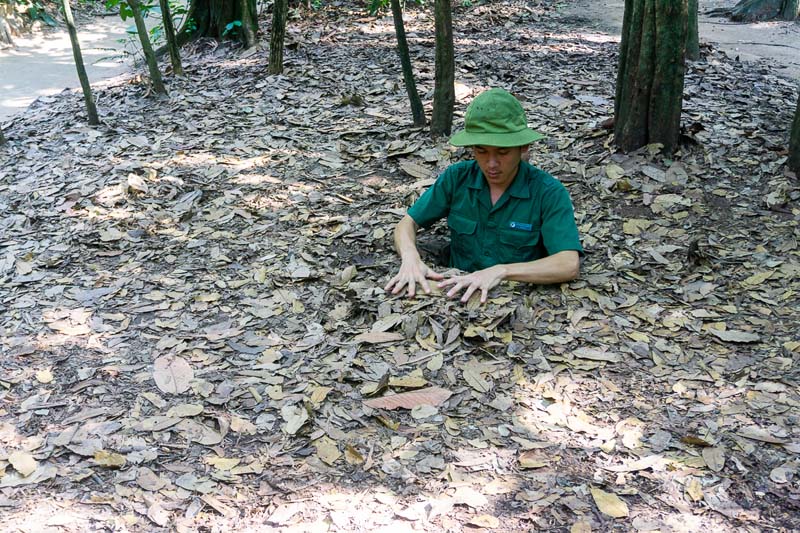
Our guide was a former translator for the American. He told the story of the North Vietnamese. He explained how they could disappear in the jungle by sneaking into cave entrances camouflaged by termite hills being placed on top. Cayenne pepper would be sprinkled around the entrance to disrupt the search dogs’ senses.
We learned that the Vietcong fought in sandals made from tires to avoid jungle rot. And ran through the jungle effortlessly. The Americans suffered greatly with wet feet rotting in their boots. Little did they know that the boots were causing so many problems and sandals were their best defense.
Booby Traps inside the Tunnels
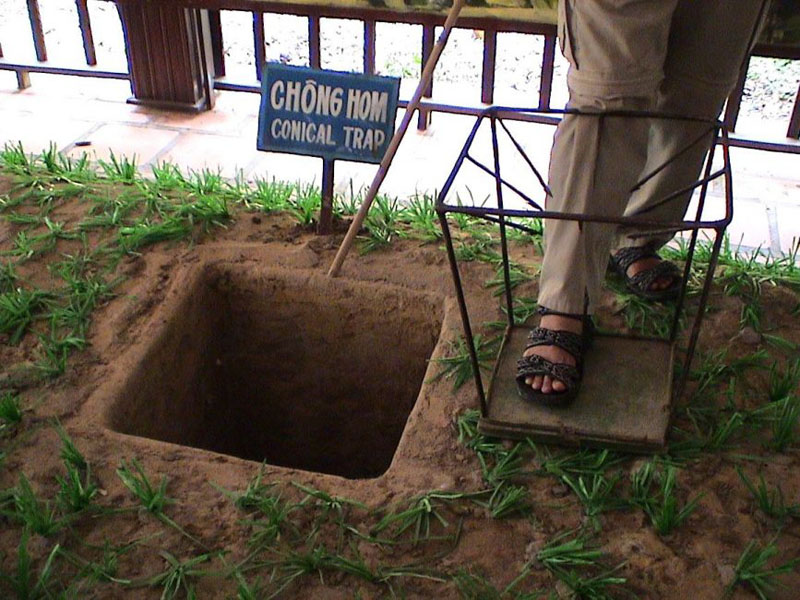
We also learned about the booby traps laid out, waiting for the moment when the U.S. would find a cave entrance. I can’t imagine what it must have felt like for the American tunnel rats having to go into the narrow openings whenever they did find one.
A tunnel rat was the poor soul who was given the task of exploring a cave when they did find an opening. They had to go into darkness knowing that bamboo spikes or other painfully slow ways to die were waiting for him around the corner.
What To Expect on the Cu Chi Tunnel Tour
The tour is fascinating. If you really listen to your guide, you will come away with a great deal of knowledge about the gorilla warfare that happened in these jungles.
There are two areas left that tourists can visit. The Ben Dinh and Ben Duoc sections of the Cu Chi Tunnels.
Ben Dinh Cu Chi Tunnels are 50km from Ho Chi Minh while Ben Duoc is 70 km from the city. We learned how the Viet Cong wore checkered scarves to announce to fellow countrymen that they were fighting for the North without the Americans know.
Farmers would sneak food to soldiers as they were living underground in the Cu Chi Tunnels for years on end. They had an entire society set up underground in the Cu Chi Tunnels.
Different Rooms and levels of the Tunnel System
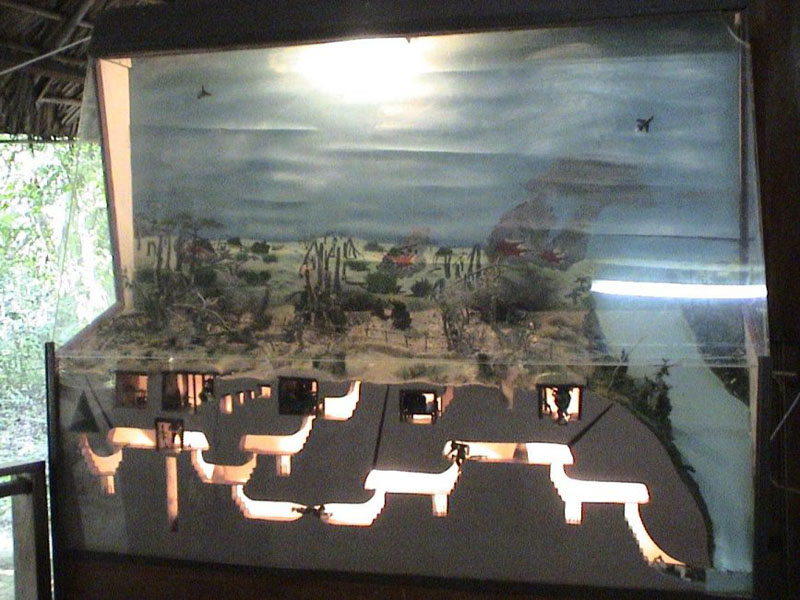
They had different rooms for planning and meeting. There was a complete society underground.
Kitchens were built underground and they only cooked during the early morning. The morning fog hid their smoke blending in with the environmnet so the American forces couldn’t spot them.
The Cu Chi Tunnels even had makeshift hospitals where wounds were tended and children were born. There was a living civilization struggling and surviving underground for years on end.
How the Vietcong Tracked American Soldiers
And yet, the thing that we found most interesting was when our guide showed us the plants of the jungle. As you walked by, they would bend and their leaves would curl in the direction that you were walking. It was so easy to track the enemy once you knew this secret. There was no walking through the jungle unannounced when the trees were telling everyone that you were there. Incredible.
Cu Chi Tunnels Original Entrance
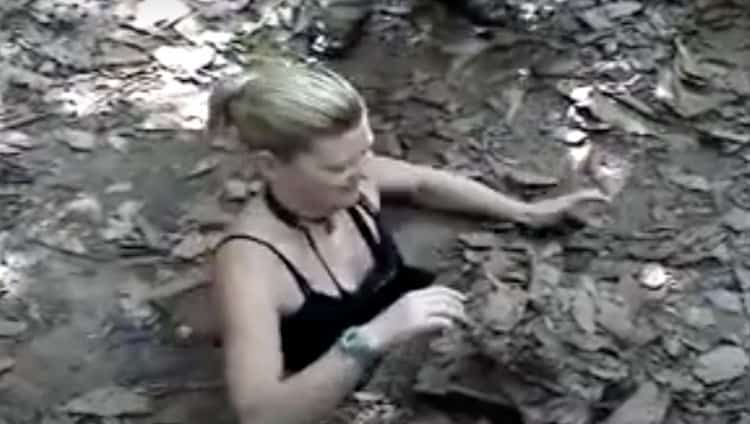
The highlight of the tour was definitely going into the tunnels original entrance. We had the option to go into the tiny opening and crawl 150 metres to the next exit. Only five in our group decided to go for it and it really gave a sense of just how uncomfortable the conditions were.
I didn’t realize I was claustrophobic until a few minutes into our underground journey. The dim lights went out for a few seconds but we kept crawling in the dark.
Earlier, I saw some lights leading to another direction through another tunnel, and I was starting to panic that we had taken a wrong turn. The tunnel system is hundreds of kilometres long and the irrational worry took over that I would become lost in the maze.
Check out my Cu Chi Tunnels video of our crawl through the original entrance.
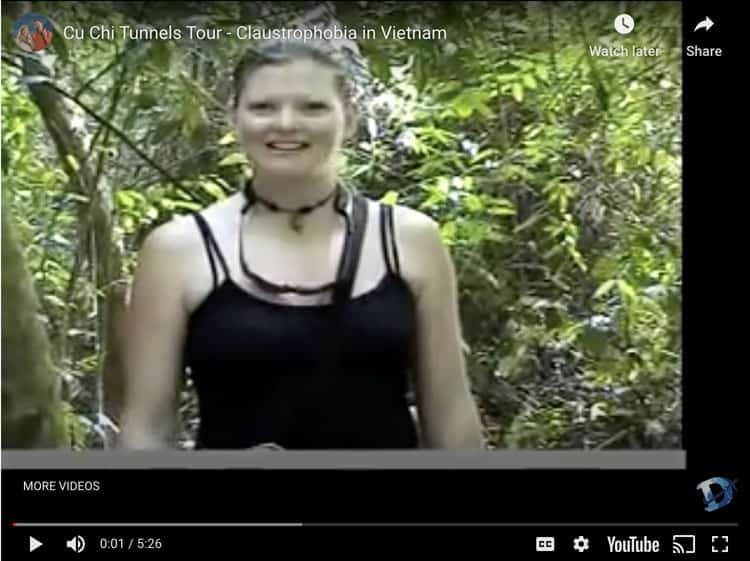
The lights came back on, just in time for 3 bats to fly by our heads. I was definitely ready to get out of there. I don’t know how anyone could last in there for hours on end, let alone years on end.
Unlike the Vietnam War, we didn’t have to worry about meeting up with an unexpected enemy in the tunnel, we didn’t have to worry about bombing, malaria, lice, infection or starvation. We only had to worry about making to from point A to point B so that we could catch our bus back to the city in time for dinner. And that was enough for me
War Remnants Museum
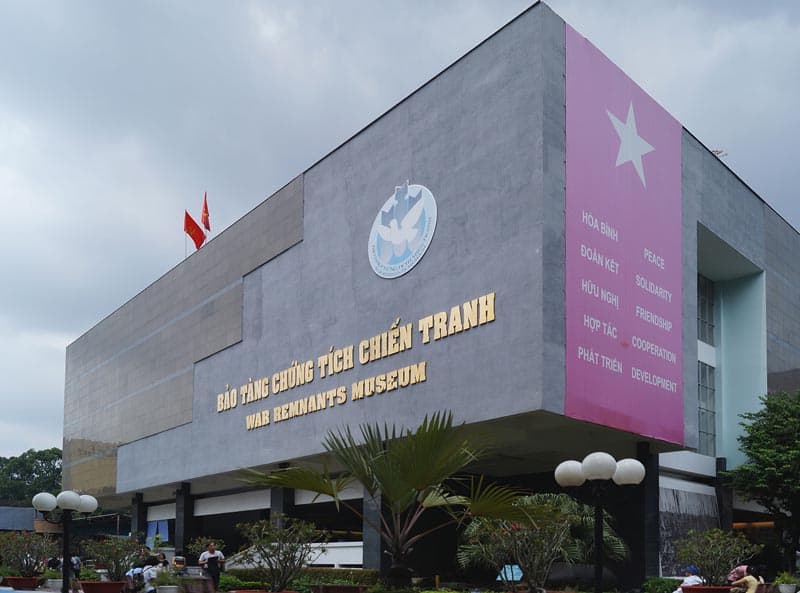
Part of the Cu Chi Tunnel tour is to stop at the War Remnants Museum in Ho Chi Minh City. We were dropped off at the museum in Saigon and left to wander on our own time. This is where the tour ended, so we had to find our own way back to our hotel. But Ho Chi Minh is easy to get around and this museum is centrally located. The War Remnants museum is an emotional look at the effects of war.
Horrors of Napalm and Torture
Photos of napalm and victims and acts of torture hung on the walls of the museum reminding us of the horrors of war. The tools they used for torture and death were on display and devastating photos of the effects of Agent Orange we hanging all over the room.
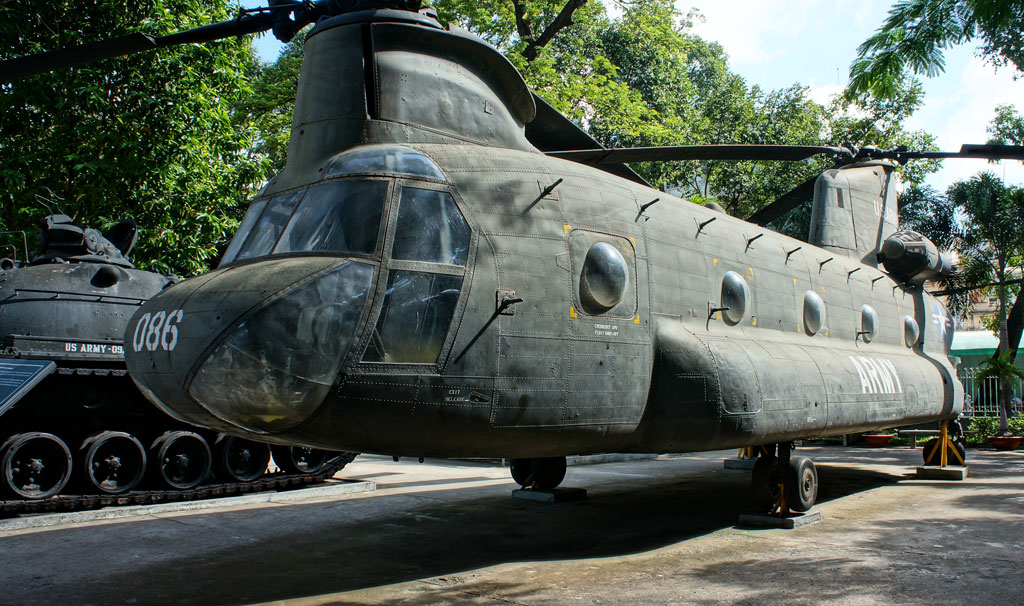
There are tanks, bombs and planes outside. You will see torture chambers and the cages that POW’s were kept and cells.It is a difficult museum to visit, I learned a great deal and it is something that should be seen to remind us all of the horrors of war. What sense is there in all this killing and suffering?
Photographers of the Vietnam War
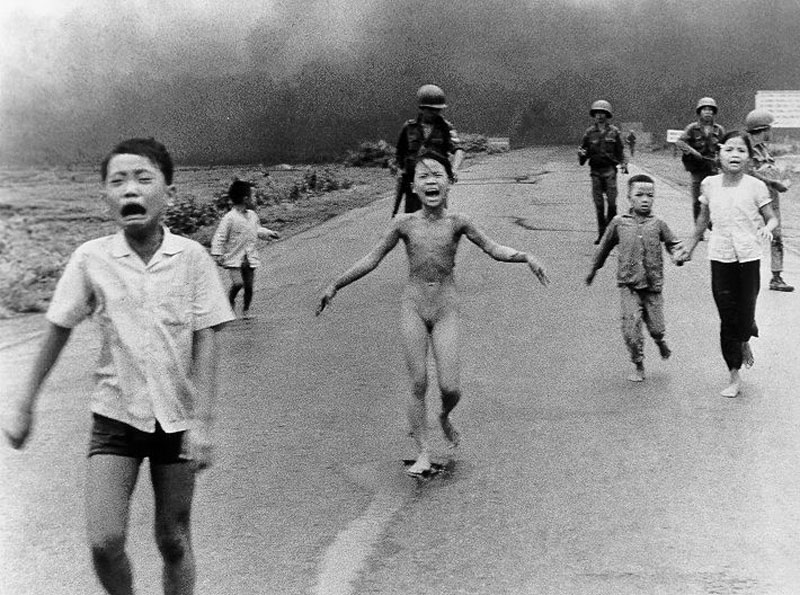
There is also a display honouring photographers and correspondents who lost their lives covering the war. It is a moving tribute to the men that kept the world informed about the atrocities going on in Vietnam.
Kim Phuc’s picture is on display. She was the girl in the photo running down the road with her body covered in burns from Napalm. I had a chance to meet Kim Phuc here in Canada where she now lives.
She travels the world speaking about war, peace and healing through faith. I wrote about her a couple of months ago, in my Girl in the Picture Post.
The Cu Chi Tunnels is a fascinating tour from Ho Chi Min City. It is a little bit on the touristy side, but well worth seeing. To be in a place where a momentous event in history took place is always an intriguing experience.
How to Get to the Cu Chi Tunnels
We recommend taking an organized tour of the Cu Chi Tunnels that leaves from Ho Chi Minh city, but you ca also hire a motorbike tour or private car. Or you can even rent a motorcycle if you feel confident riding and join a tour once you arrive at the tunnels.




War Remnants Museum and Cu Chi tunnels are places that everyone who wants to know what the war from the Vietnamese viewpoint should visit. A visit there is a shocking experience, but I think everyone should see it.
Bonjour,
Il y a encore des sites touristiques au Vietnam pour vous decouvrir!!!
Many people said that Cu Chi is not something you SHOULD visit in Vietnam… I kinda disagree with that. It is something pretty much interesting and historical. it is always nice to visit it. And as the guide will tell you ‘you never visited Cu Chi if you don’t enter the tunnel!’
Cheers,
Antoine
Tracking by using jungle plants and avoiding foot rot with tire sandals – absolutely brilliant. I think we sometimes underestimate the knowledge that locals have of how to survive – and survive well – even in peaceful times. What we may view as an eccentricity or lack of supplies/money/technology abroad, could just be smart living if we knew more about it.
That gun picture says ‘don’t mess with me’. It kinda looks like a laser gun from a science fiction movie come to think of it…
How did you obtain the Visa, as Canadians? Did you have to arrange it ahead of time, or could you get it at the boarder crossing?
We got our Visa in Cambodia a couple of days before entering Vietnam. It was pretty straightforward. I am not sure if you can get it at the border, but you are probably safer to apply ahead of time. In Cambodia it only took a couple of days to be processed.
Yeah, it was pretty cool. She lives just outside of Toronto she spoke and event in Burlington where Dave’s parents live. She is quite amazing. We spoke briefly afterwards and I asked her if she had gone back to Vietnam. She did in 2004, but because of her injuries, she does not do well in the heat. Her sweat glands were burned away. She let me touch her arm which doesn’t even feel real is was burnt so deeply. But she is certainly resilient.
You are far braver than I am – I don’t think I’d crawl those tunnels….and what a cool opportunity to meet Kim Phuc!
I was station in Cu-Chi,Vietnam in 1969, I was first with the S&T battalion ,then with the 2/ of 34 armor battalion C Company. I have picture still with me today. Where I was station at Cu-Chi I could see the Black Virgin Mt. ( Nui Ba Dan ) I hope I spell that right.There is a rock in front of my company that was color yellow with 2 34 on it. I wonder if you saw it. I also took picture of all the barrack ….
Hi Thomas, thank you for coming by ThePlanetD. That is quite amazing that you wee there in 1969. That was a very different time indeed. It must be strange to revisit Vietnam through articles and blog posts today. Have you been back or do you ever plan on going back? We came across many Vetrans who were traveling the country during our time there. I wouldn’t be surprised if the rock was still there. I don’t think that they have changed too much of the sight. All the best to you.