
What are the best places to visit in Africa? We cycled the continent from Cairo to Cape Town and have visited several countries in Africa since our first visit in 2008. Every time we leave the continent we feel that we truly have left our hearts in Africa. It is one of our favorite places to explore on earth.
These are the best places to visit in Africa that will make you fall in love with the continent. It isn’t some Wikipedia round up, it’s first-hand advice from people who have actually travelled to Africa.
Best Places to Visit in Africa
When traveling to the birthplace of civilization you can’t help but feel the energy of the continent. It is a massive piece of land that has its own unique energy and culture in each country.
When we cycled from Cairo to Cape Town, we saw it change before our eyes. From the arid desert lands of the Sahara and Nubian deserts in the north to the lush jungles of Zambia, and the incredible plains of East Africa. Africa stole our hearts and it will steal yours. These are the most beautiful places to visit in Africa.
1. Mount Kilimanjaro – Tanzania
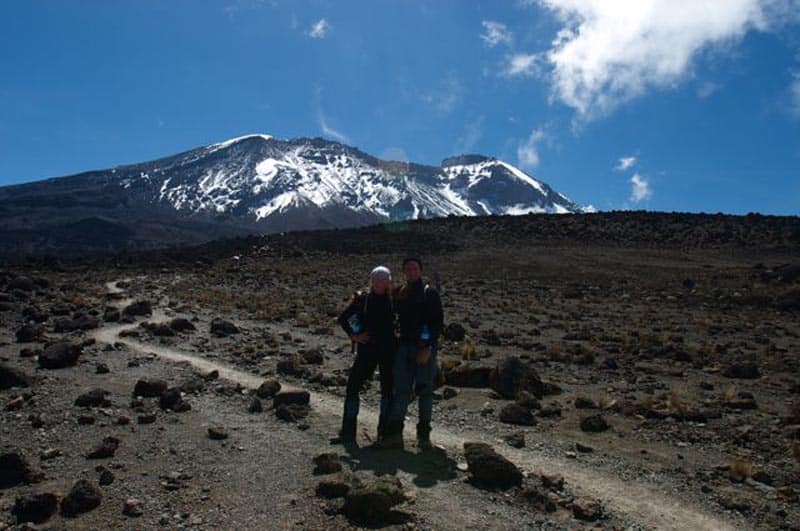
When it comes to the best places to visit in Africa, nothing compares to Mount Kilimanjaro. Mount Kilimanjaro (Kili as it is affectionately known) is the highest mountain in Africa, and at 19340ft it is not surprising that summiting this impressive mound is a difficult and sometimes grueling task.
And we have the bragging rights to say we did it! The highest peak, Uhuru, can be reached by those with a moderate to high level of fitness, and if you can summit you’ll be able to say you reached the point of the tallest free-standing mountain in the world. More on Mount Kilimanjaro – Mount Kilimanjaro, How Hard is it to Climb
2. Serengeti National Park – Tanzania and Kenya
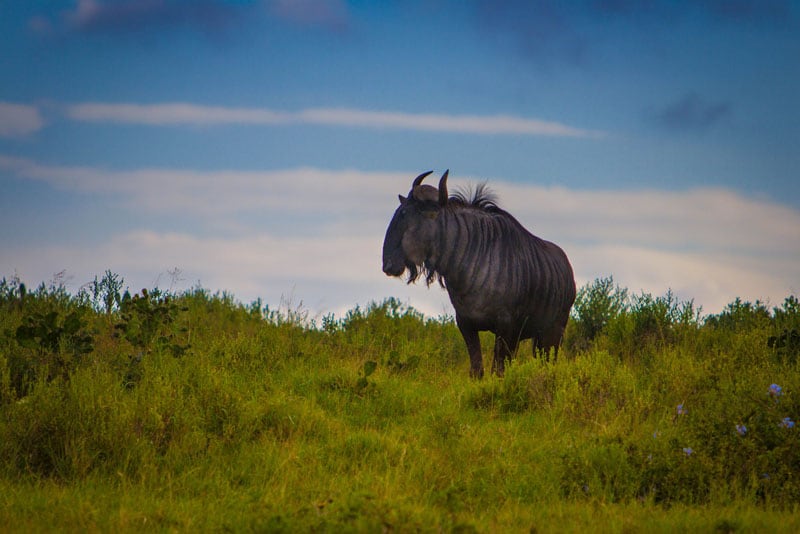
Arguably one of the most amazing natural events in the world, the Wildebeest Migration is an impressive movement to witness. The migration takes place among the open plains of Serengeti National Park in Tanzania to the Masai Mara of Kenya.
More than a million wildebeest and zebra move towards greener pastures. The mass movement is a tense journey for the herbivores as they are followed closely by various predators hoping to benefit from the stragglers’ weaknesses. One of the best ways to see the Wildebeest Migration is from the air in a hot air balloon.
3. Masai Mara National Reserve – Kenya
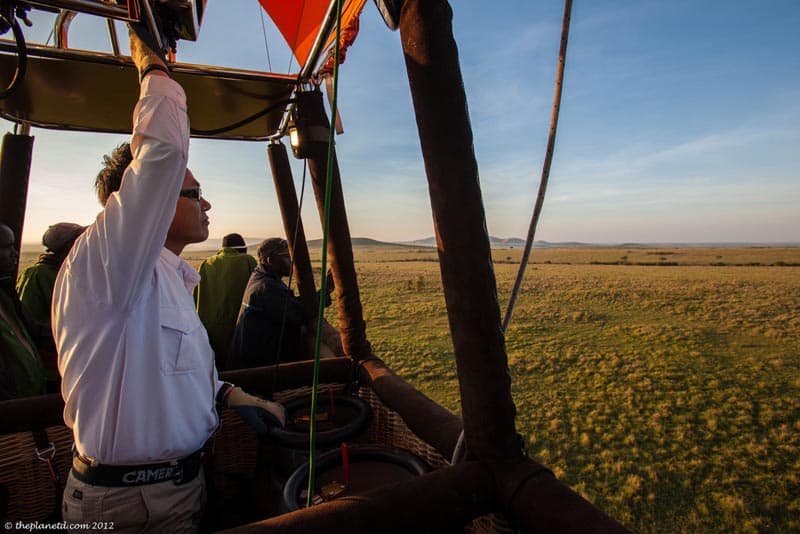
The Masai Mara National Reserve is Kenya’s answer to the Serengeti and it is spectacular. It is actually connected to Serengeti. The mara is arguably one of the best places on the continent for wildlife viewing. When we took a hot air balloon over the Masai Mara we actually landed in Tanzania. During our safari in the Masai Mara, we saw all of the big 5 animals. It is one of the most beautiful African Destinations.
4. Lake Nakuru – Kenya
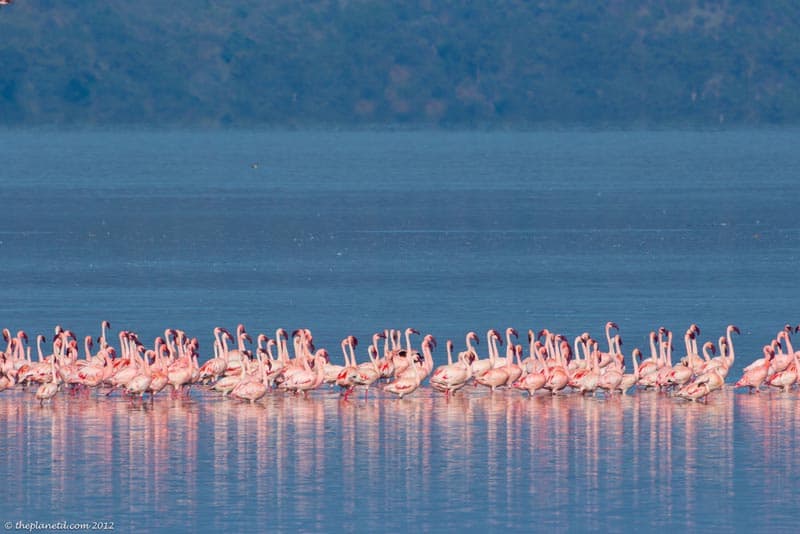
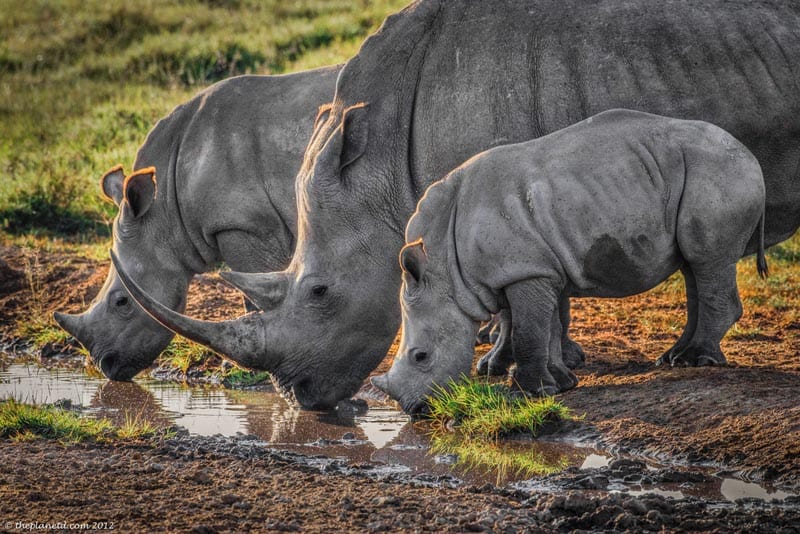
Lake Nakuru is one of the best places in Africa to see rhinos in their natural habitat. The African rhinoceros is under threat, but in Lake Nakuru, they are protected and you will have a good chance of seeing them in the world. Lake Nakuru is also known for its bird migration and a place where you can see thousands of flamingoes flying along its shore.
Lake Nakuru is an alkaline lake that attracts many species of birds and wildlife to its shores. When booking a tour of Kenya, be sure to include this in your itinerary.
5. Ngorongoro Crater – Tanzania
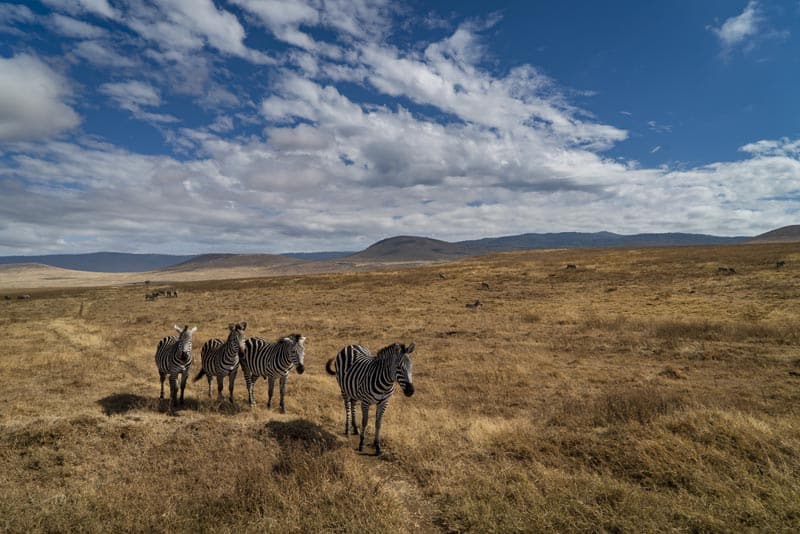
The world’s largest unbroken, unflooded volcanic caldera, the Ngorongoro Crater is one of the great places to go in Africa. The Ngorongoro Crater measures 19km across, 600metres deep (from the rim of the crater to the floor) and has a total floor area of 260km squared.
When we visited The Ngorongoro Crater it felt as if we were entering a Disney Movie. Thousands of animals lived in harmony as zebras pranced and lions stalked their prey. It was like being in a fairytale.
The Ngorongoro Crater was one of our favorite destinations of our African Safari in Tanzania. A giant volcano exploded and then collapsed on itself around three million years ago to form the colossally remarkable crater. It is considered a “natural enclosure” for wildlife – many species are found on the crater floor.
6. Virunga National Park – Rwanda and Uganda
The chain of volcanic mountains that make up the Virunga Mountains lies on the border of Uganda, Rwanda and the DRC. Their spectacular beauty is due to their luscious and fertile slopes. The Virunga Mountains are also the only remaining home of the severely endangered mountain gorillas.
We met the world’s premier gorilla expert Ian Redmond while traveling in India and have wanted to visit the gorillas ever since. While haven’t actually visited the Gorillas yet, we do feel we know a lot after meeting Ian and talking with Rwanda Tourism.
Virunga National Park and the Virunga Mountains are home to other interesting animals such as Chimpanzees, forest elephants and the okapi (a mammal similar to the giraffe but with much shorter legs and neck, they have stripes down their legs).
7. Lalibella – Ethiopia
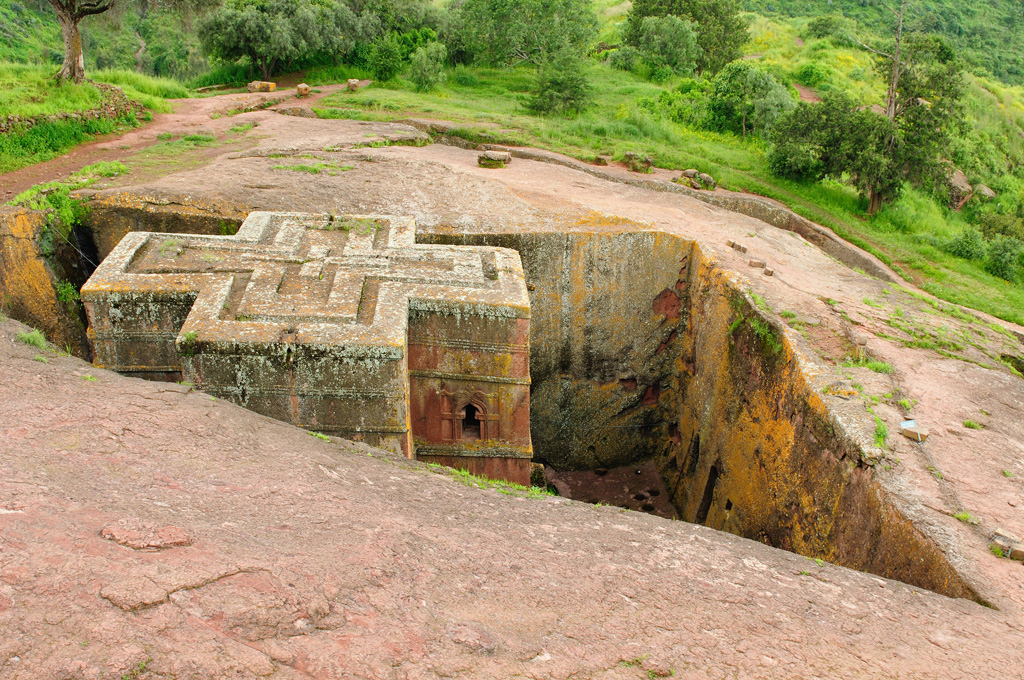
Ethiopia isn’t on a lot of people’s radar, but it is a fascinating place to visit in Africa. It is filled with historic sites and stunning scenery. People still think of the famine of the 1980s when picturing Ethiopia, but it is a lush and green country housing rocky mountains, lakes, and rivers.
Lalibella is a complex of stone churches dug into the ground. Ethiopia embraced Christianity and while cycling through the country for 23 days, we saw its presence throughout. Other places to visit in Ethiopia are Gondar, a picturesque city filled with medieval castles dotting a lush landscape of trees and lakes.
8. Table Mountain – South Africa
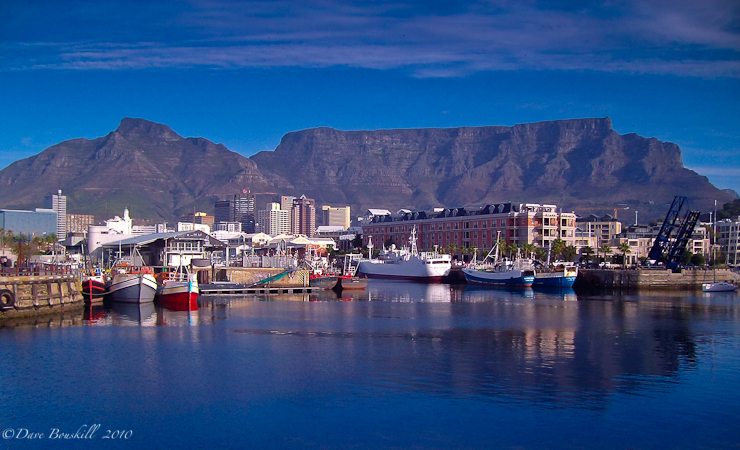
When Dave and I first arrived in Cape Town it was shrouded in cloud. We had heard it was the most beautiful city in Africa, but it took four days to reveal itself. Best Things to do in South Africa
When the rain lifted, the most awe-inspiring scene appeared as the massive Table Mountain towered overhead. Cape Town is our favorite city in Africa. It’s an amazing place to make a base to explore all the great things that South Africa has to offer.
From wildlife safaris to wine tours, diving with sharks, to a great road trip, South Africa has it all, and it all begins in Cape Town. Enjoy our list of the Best Things to do in Cape Town.
9. The Namib Desert – Sossusvlei Namibia
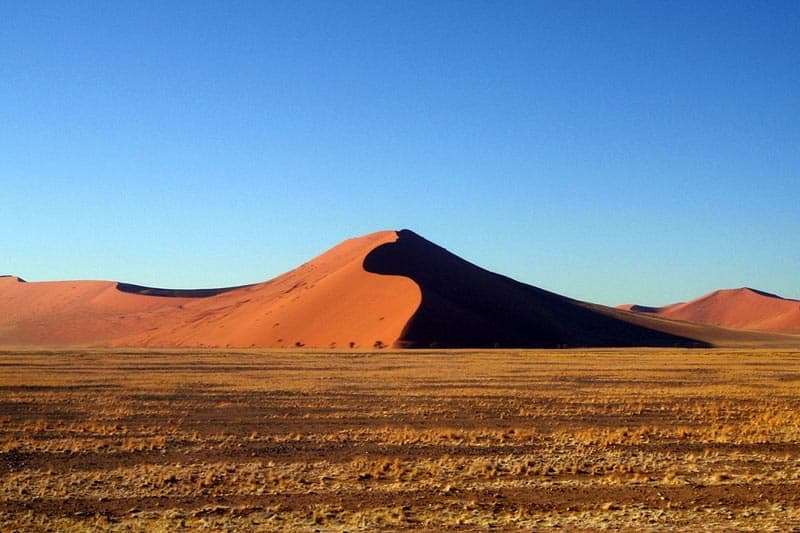
This huge clay pan enclosed by magnificent sand dunes is located in the Namib Naukluft Park of Namibia. Some of the massive sand dunes are an unbelievable 300 meters tall and are often referred to as the highest in the world.
When it rains, a rare occurrence, the Sossusvlei fills with water and the resultant turquoise lake remains for long periods as the clay layers allow very slow water filtration. The Namib Desert is truly one of the most unique and best places to visit in Southern Africa.
10. Okavango Delta – Botswana
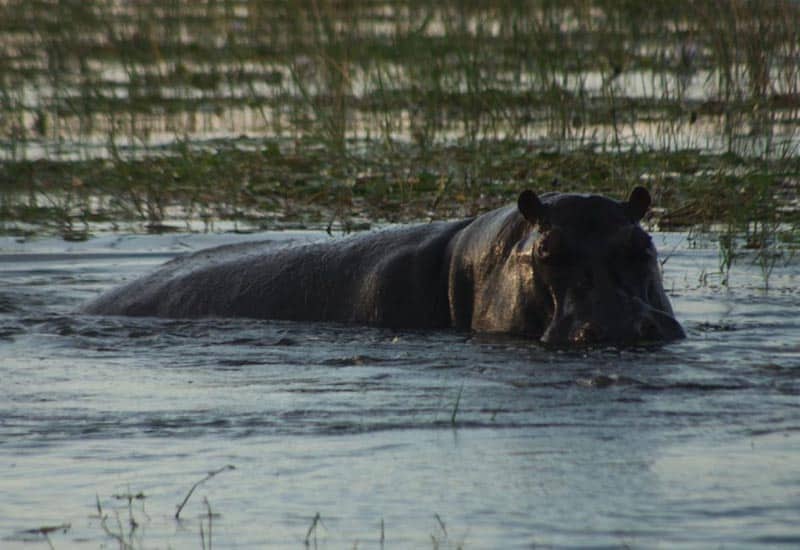
The Okavango delta is often incorrectly referred to as the Okavanga Swamp. It is the world’s largest inland delta and covers an area of 17000 square kilometers. Thousands of years ago the drying up of the Lake Makgadikgadi was the cause of this unique water feature, and it has attracted explorers and tourists ever since.
The Okavango River drains its water onto the Kalahari Desert plains in Botswana and forms an intricate and awe-inspiring labyrinth of inland lagoons, lakes and islands – the Okavanga Delta.
11. Fish River Canyon – Namibia
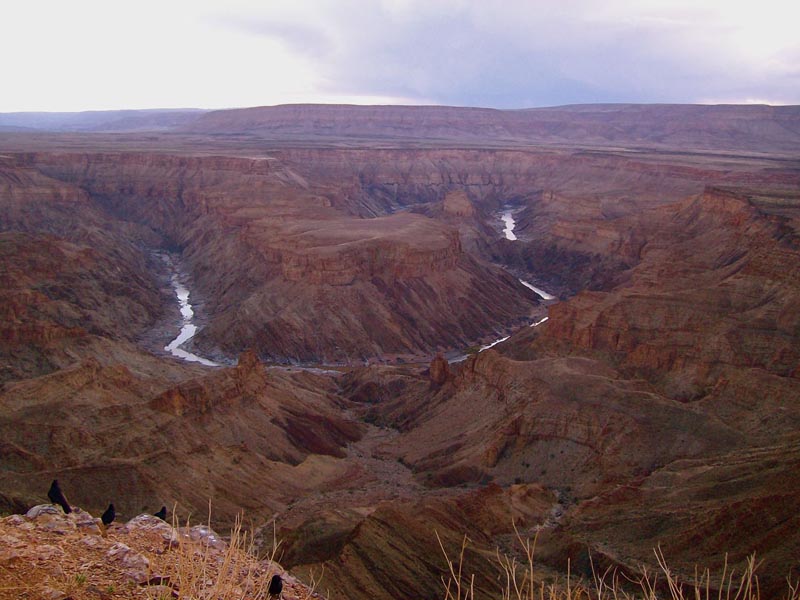
After the Grand Canyon of America, the Namibian site of the Fish River Canyon is the most spectacular in the world. With a 160km ravine which measures at about 27km wide and 550 meters deep in some places the Fish River flows in the belly of this giant spectacle.
Here you’ll enjoy wide-open spaces that allow you to breathe the fresh air easy and take in the vast scenery.
12. Victoria Falls – Zambia and Zimbabwe
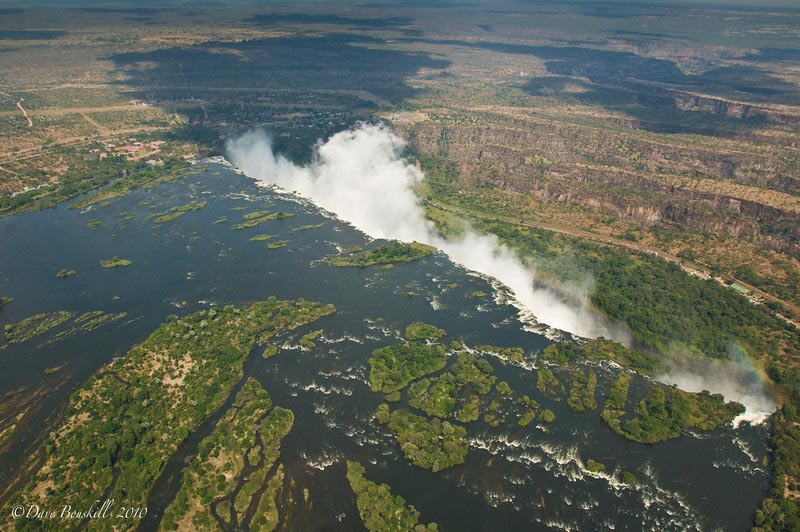
The thousands of tones of water gushing downwards is the site of the “largest curtain of falling water on the earth”. Victoria Falls is a grandiose waterfall on the Zambezi River at the Zimbabwean-Zambian border. One of the most famous things to do in Victoria Falls Vic is to go bungee jumping on the bridge between Zambia and Zimbabwe.
The “Mosi-oa-Tunya” (smoke that thunders) columns of water spray can be seen from miles away and the sound elaborates to visitors just how powerful the water flow is.
On the Zambian side, there are relatively-safe natural pools to swim in so don’t forget to bring your costume (and your camera of course). More on Victoria Falls – Top 5 Adventures in Victoria Falls
13. Chobe National Park – Botswana
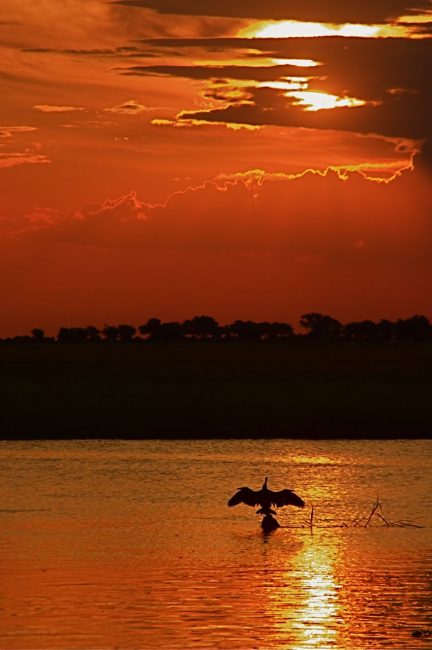
I remember cycling the elephant highway through Chobe National Park. As we rode along the paved road cycling 800 km in just five days, we wondered what lurked behind the long grass.
Home to Africa’s largest concentration of elephants, we camped among elephant dung and wondered when the next herd would walk through our camp. It was an exciting time!
One of the most unique African safaris we took was on a riverboat in Chobe where we floated along the waters watching wildlife gaze upon the shore. You can even visit Chobe on a day trip from Victoria Falls if you are in Zambia and want to add another country on your Africa bucket list.
14. Lake Malawi – Malawi
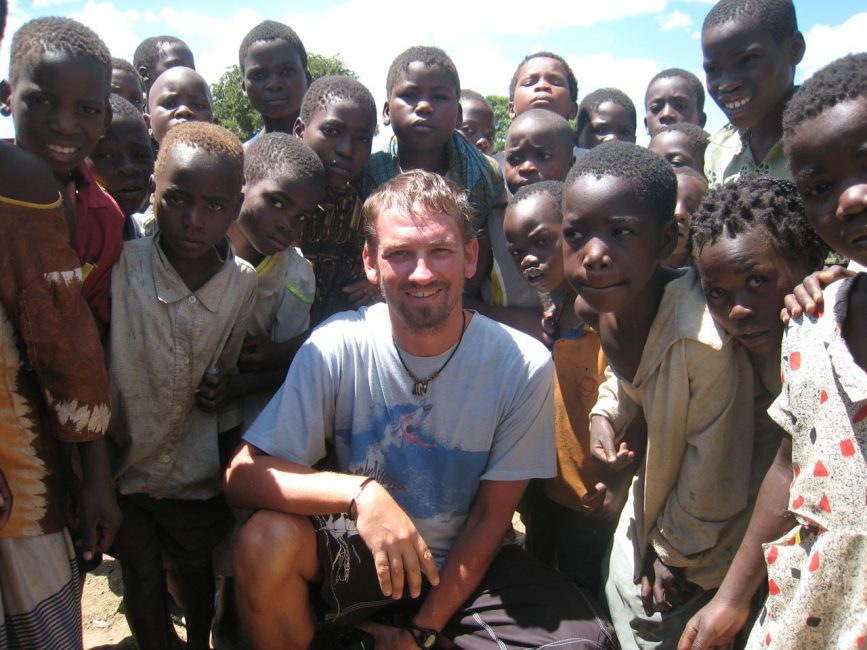
Malawi isn’t the most visited place in Africa, but it is one of the most special places we visited. It was camping on the banks of Lake Malawi that felt like a dream. Local villagers flocked to our camp each evening to say hello and welcomed us with song and dance.
We’ll never forget the hospitality of this country and there are many things to do in Malawi. You can go on safari here, cruise the Lilongwe River and explore the 4th largest lake on earth.
15. Kruger National Park – South Africa
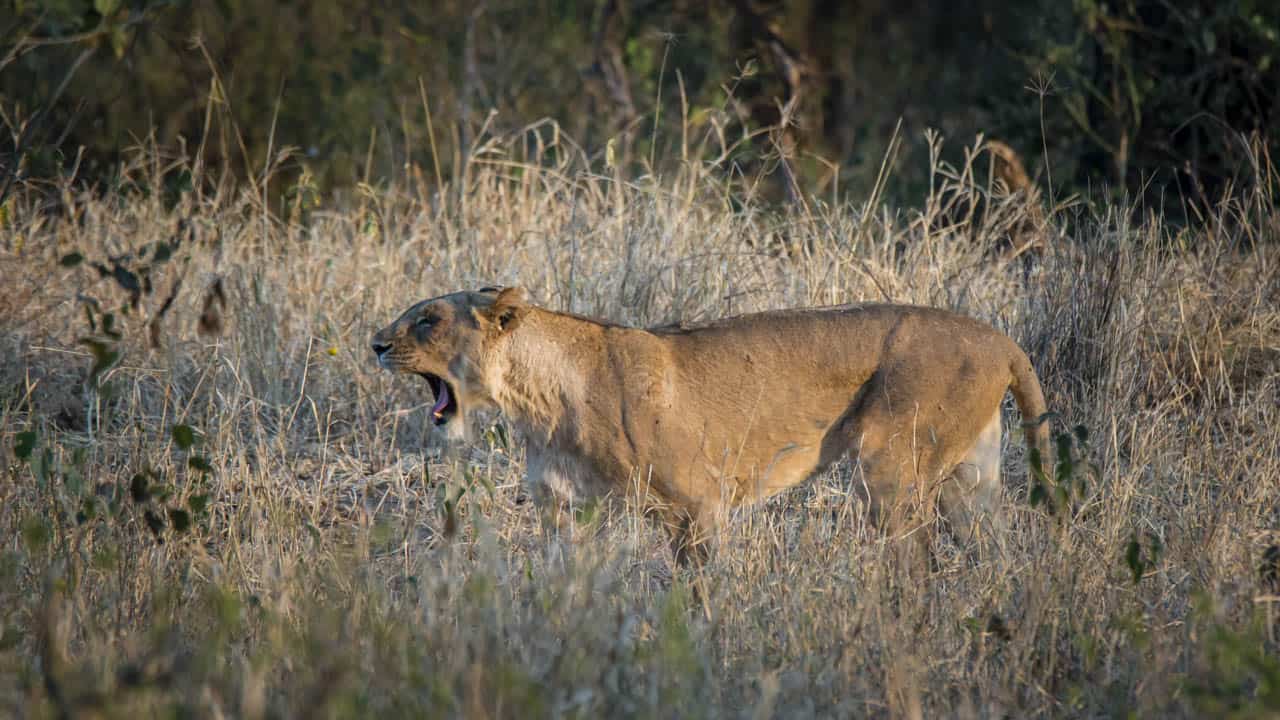
When cycling the South African nations from Zambia to South Africa, we visited many national parks. And Kruger National Park is the premier wildlife viewing game reserve in the country.
It is South Africa’s premier safari destination. But if you base yourself in Johannesburg, this is the place to go to see Africa’s big 5. We went on many other game safaris in the country though and all of them were fantastic so we felt like we didn’t miss out. Other game reserves include Kariega Game Reserve, iSimangaliso Wetlands, and other private game reserves.
16. Great Pyramids at Giza – Egypt
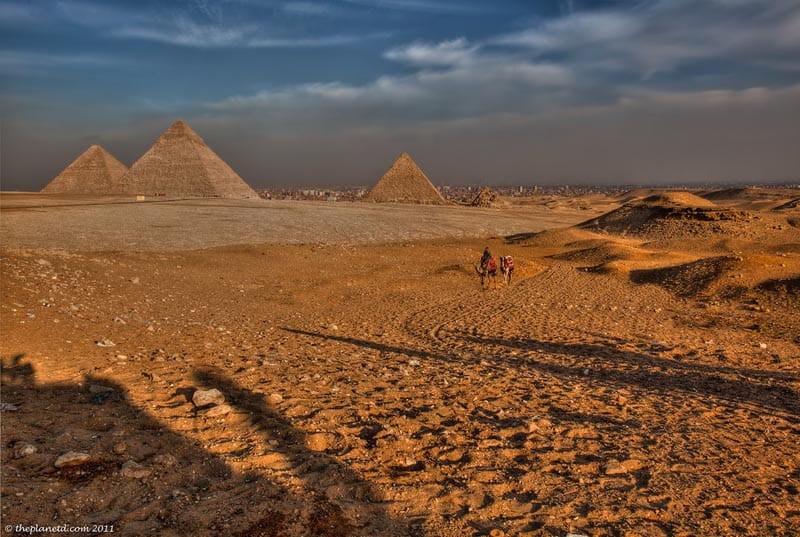
The Egyptians have such a rich and decadent cultural history, and the Pyramids are an important cornerstone in that regard.
The triangular architecture of the Pyramids has become the icon most famously synonymous with Egypt, and most of them (there are over 100) were built as tombs to preserve the mummies of Pharaohs and their family-members. More on Pyramids of Giza – Great Temples and Monuments of Egypt, Discovering Egypt, A Photostory
17. White Desert – Egypt
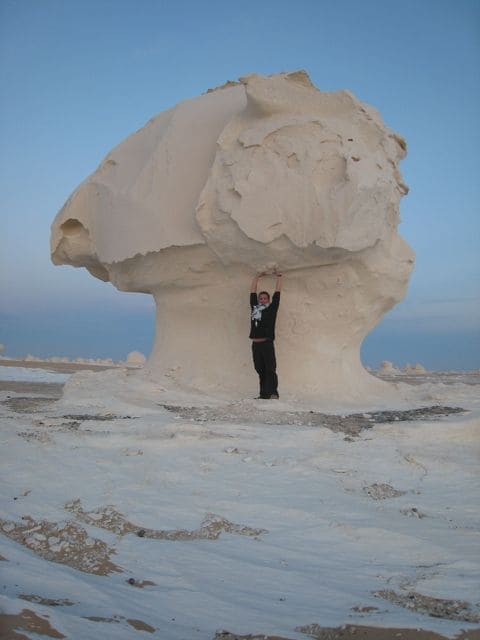
It amazes me how few people know of the White Desert of Egypt. It was at the top of our list of best places to visit in Egypt only second to the Great Pyramids.
The White Desert of Egypt is located near the town of Farafra in Central Egypt. The white chalky formations were formed by sandstorms that occur in the area.
We took a jeep safari to the White Desert to experience what life is like for the Bedouins of the area. It was spectacular to camp outdoors in the middle of the Western Sahara Desert.
18. Where the White and Blue Nile Meet – Sudan
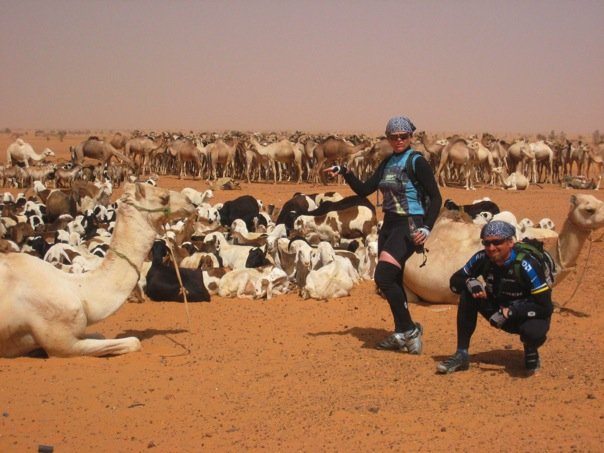
Sudan is not on many people’s radar, but the African nation of Sudan touched our hearts.
It was more like a scene from Lawrence of Arabia than actually being in Jordan where Lawrence of Arabia took place. Camel herds walked the desert as Bedouins stopped us to say hello. (and offer a camel or two to marry Deb)
It is home to where the Blue and White Nile Rivers meet. The world’s longest river converges in the capital city of Khartoum from Ethiopia’s Lake Tana, The Mediterranean Sea in Egypt and Lake Victoria.
19. The Souks of Marrakech – Morocco
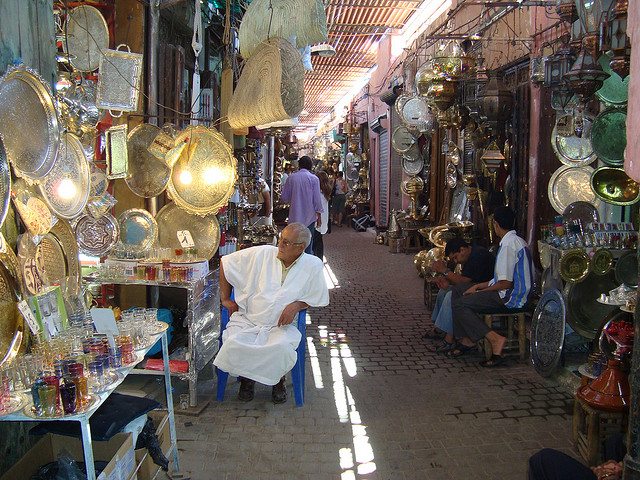
Marrakech conjures images of an ancient civilization living as it has for centuries and it doesn’t disappoint. Get lost in the Medina as you explore the souks of Marrakech. Watch the sunset over Jemaa el Fna or take a trip to the desert to see the Bedouin way of life.
Marrakech does not disappoint, and while there, indulge in Morrocan food that is a feast for the senses. Check out our list of the best things to do in Marrakech.
20. Fez – Morocco
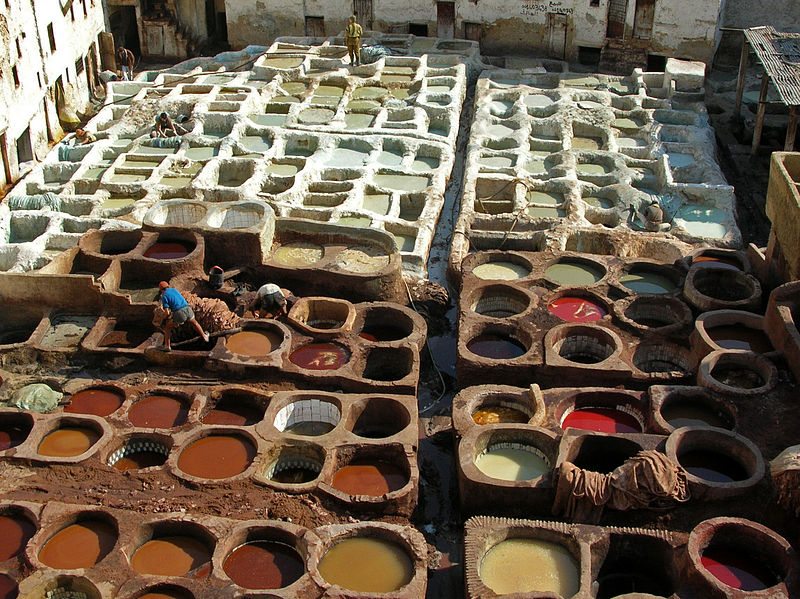
Fez is the oldest city in the country and the Medina (or Fes el-Bali) is a UNESCO World Heritage site. There is nowhere in Morocco that has quite the vibrancy and culture of Fes, and in particular the Fes el-Bali, so a visit to it should be an essential destination on your itinerary.
21. Blue Nile Gorge – Ethiopia
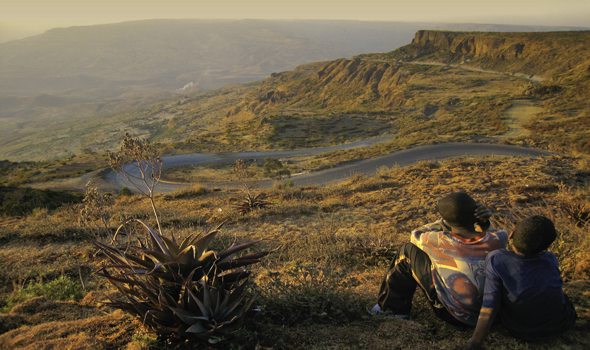
The Blue Nile Gorge takes us up an incredible climb from the bottom of the gorges to a spectacular view at the top.
We cycled up this gorge to truly appreciate the intense climb. The dramatic road filled with switchbacks tested our limits but the view was worth it. Ethiopia was surprisingly mountainous. We climbed to the top of many views just like the one above.
22. Karnak Temple Complex – Egypt
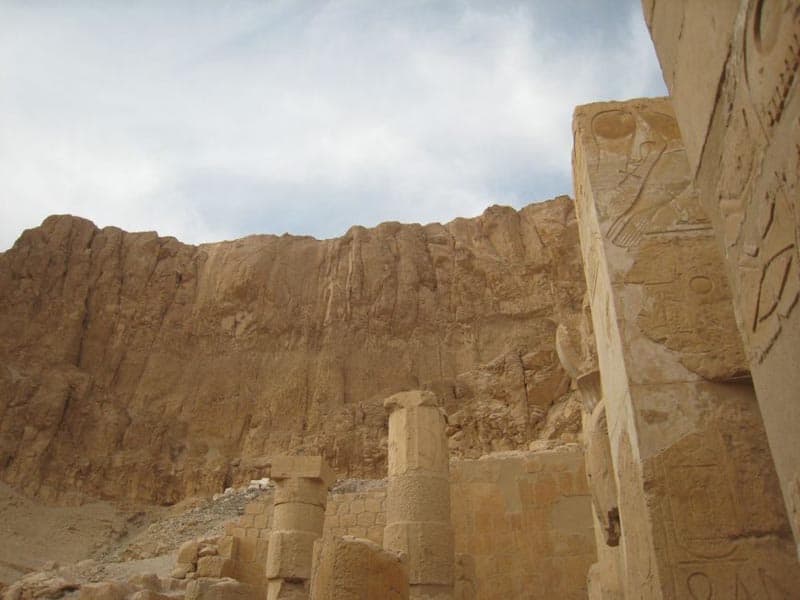
This is one of the most impressive and largest temple sites around the globe. It is a conglomeration of three main temples and several smaller temples (which sadly are in ruins). Read more: 10 Amazing Temples of Egypt – That We’ve Seen
The Karnak Temple Complex is also located near Luxor which is home to other impressive sites. It is the only main temple area open to tourists and the general public. For a period of about 500 years between the 16th and 11th centuries BC it was in the Valley of the Kings where the tombs for Kings and all other nobles were constructed.
23. Valley of the Kings – Egypt
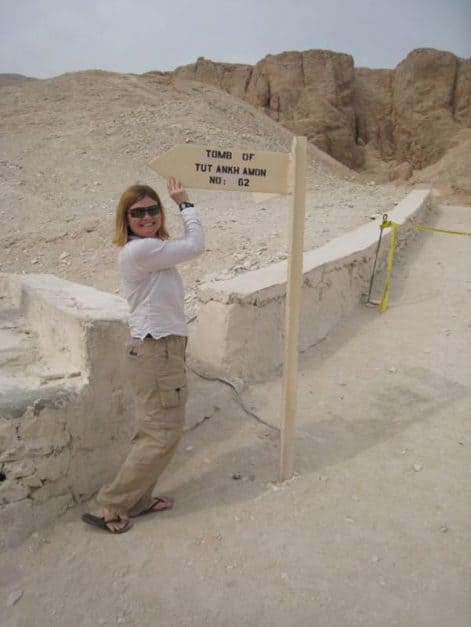
Found on the West bank of the river Nile near Luxor this impressive valley is not only majestic because of the 63 (approximate) royal tombs in the area, but because of the expansive landscape.
Most of the tombs are said to hold priceless Eqyptian antiquities (some of which have been stolen over time). It was in this valley in 1922 that the intact tomb of the great historical figure Tutankhamun was discovered. Read more: 20 Exciting Things to do in Egypt – Plus A Few Fun Facts
24. Abu Simbel – Egypt
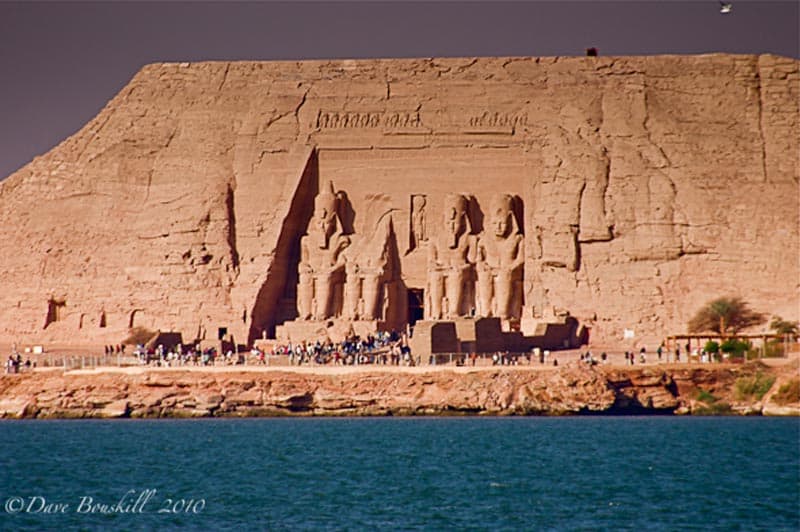
Historically moved from their original location the two temples at Abu Simbel are an impressive sight to behold. We visited Abu Simbel while taking a ferry from Egypt to Sudan. It is an extraordinary sight.
They were carved out of the sandstone cliff near the River Nile over three millenniums ago – during the reign of the great Pharaoh, Ramesses II. The temples were built to honour the Pharaoh and the Egyptian Gods.
25. Zanzibar – Tanzania
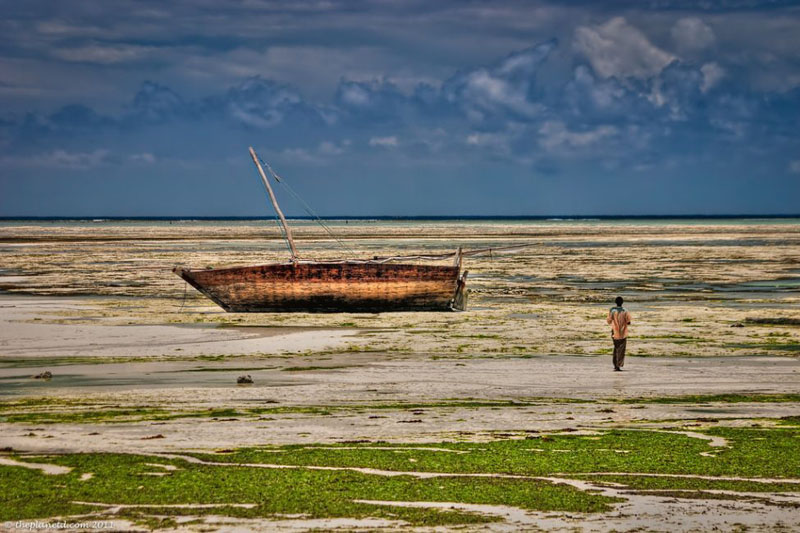
Zanzibar is a paradise island off the coast of Tanzania in the Indian Ocean. Visiting it after climbing Mount Kilimanjaro took us to paradise. The beaches of Nungwi are the most beautiful in the world with powder white sand and a tide that leaves the most colorful scene along the seabed. Stone Town is a maze of medieval streets. A UNESCO World Heritage Site, it takes you back in time to the height of the spice trade.
- Cool fact: Freddy Mercury of Queen spent his childhood here while his father was stationed in Zanzibar representing the British government.
- Read about Discover The Best Beaches in Zanzibar
26. Seychelles
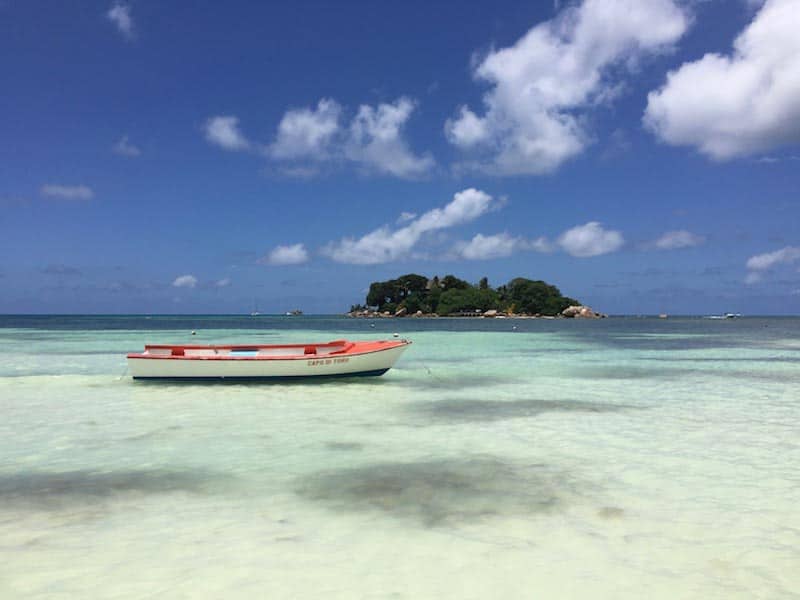
This is a place we have yet to travel in Africa, but we have had several guest contributions about Seychelles and just had to include it in our Africa Travel Guide.
Located a little farther off the coast of East Africa in the middle of the Indian Ocean, Seychelles is an exotic destination with some of the most beautiful beaches in the world. Check out this article from Ben of The Sabbatical Guide the Best Things to do in Seychelles.
27. Madagascar
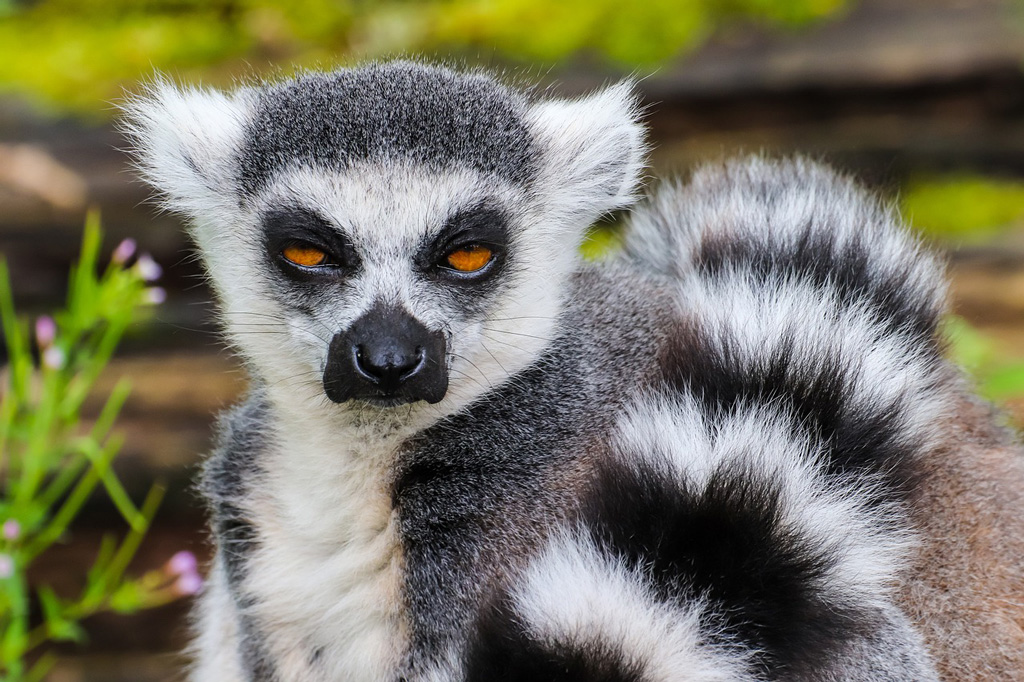
If you love adventure, the island of Madagascar is the place to go. Madagascar is like its own little Galapagos Islands with species endemic only to the island. From Lemurs to the Panther Chameleon Madagascar is filled with fascinating animal species.
When to Visit Africa
Africa is a massive continent and climate and temperatures change drastically between nations. Africa can be visited year round but you will have to keep an eye on the seasons.
Rainy season can be difficult to travel through. Trust us, we’ve been to in Africa during the rainy season and it is torrential.
The best times for an African safari depend on where you are going.
- South Africa safaris are best between May and October.
- Tanzania is best from June to October with migration happening in June or July.
- Kenya safaris are best from June to October with the migration happening there later in the season in August.
- Egypt is best visited between October and April as it can get very hot during the summer months.
- SouthAfrica can be visited any time of the year with the rainy season having short rains during the day. The dry season is hot, but not unbearable.
So many places in Africa are beautiful it is difficult to choose a favorite. But for us, the most beautiful places in Africa are, Zanzibar, The Serengeti, Cape Town, Fish River Canyon, and the Ngorongoro Crater stand out.
The best place to view wildlife in Africa is the Serengeti for the big 5 in Tanzania, Lake Nakuru in Kenya for rhinos, Amboseli and Chobe National Park for elephants and Chobe National Park for a river safari.
Lake Nakuru has the highest concentration of rhinos in Africa. If you have your heart set on viewing rhinoceros, this is the place to go.
From our list of countries in this post, the most visited countries include Morocco, South Africa, Kenya, Tanzania, and Egypt.
The African continent enjoys a vast and ever-changing landscape from lusciously fertile jungles through to the hot, arid desert.
If you are visiting anywhere in Africa there are some breath-taking places you won’t want to miss out on. These are the greatest travel destinations on the African continent.
Read More about Travel to Africa:
I can’t believe you biked through Africa because I would be so concerned with all the predators, humans included. Did you ever fear for your safety?
Please get your facts right. Serengeti National Park is in Tanzania and not in Tanzania and Kenya
Maybe if you actually read the post you would see we say the Serengeti borders the Masai Mara 🙂 Please read the actual article and not just skim the titles.
Africa can only be referred to as the epitome of adventure.
Excellent article about Maasai Mara national reserve. This park is the answer to any traveler, besides the big 5, what about the great wildebeest migration?????. This is another circus of the animals moving in a thousands in a mixture of zebras and wildebeest, with this activity, you wonder how God created animals? they behave like human beings and even better than human beings when it comes to trust and love. The cheos starts from when they are crossing mara river from Serengeti national park in Tanzania to Maasai mara national reserve in Kenya.
such an amazing continent , i envy those who have not visited africa for they donot know what to look upto
Well Africa is pretty much the epitome of adventure, housing increidble wildlife species , to me gorilla trekking in uganda is sofar the best i have had followed by the wildebeest migration in masai mara nationa reserve kenya.
Africa. There’s nowhere like it on the planet for wildlife, wild lands and rich traditions that endure. It’s really such a great place to visit.
I like to make my trip intresting,now i think choosing Africa will be a good option to make it happen.some of them mentioned above are in my wishlist mainly lake Nakuru,cape town,Victoria falls ,Madagascar.Since l love adventure and wild Africa will be good option in my coming vaccation.now i am in a thrilling mood….
Hey Dave and Deb! Egypt is on my bucket list. I can’t wait to see the beautiful pyramids in Giza. Thanks for sharing!
Thanks D & D. A very detailed article. Africa is on our list and we plan to tackle it in 2021, God-willing.
I advise you to visit Morocco, It has a very beautiful cities and plenty of sand in Sahara desert.
You can meet lovely people and try delicious meals.
A trip to the Victoria Falls is a splendid way of indulging yourself in extreme adventure. This heavenly allurement is either reaches by flights to Zimbabwe or by going through Zambia as stated above. Whichever African beauty you choose the journey to the Victoria Falls will surely be one to remember.
Excellent piece and a fantastic collection of beautiful places everybody should visit. The photographs on this page are stunning.
I have personally visited all of these site I would also all Cape Hope, Table Mountain and Kurger National Park.
Definitely recomend a Kili climb! Did you make it to Uhuru?
Wow what amazing photos. You guys have traveled so much its fantastic. I hope to travel to all these places one day. Another great place to travel to is knysna on the garden route of South Africa. It has great accommodation. you can book your knysna accommodation through accommodation-in-knysna.com
Beautiful pictures, I really like!
Awesome! I am in Egypt now and just went to Abu Simbel yesterday. It was amazing! The internet over here is not so great though! Amazing places. Hope you guys are doing well.
.-= Migrationology´s last blog ..Bangkok’s Finest Street Indian Food =-.
Awesome that you are in Egypt. We did enjoy it immensely there. Get yourself to a McDonalds in Luxor, (if that is your next stop) It has free high speed wifi: pathetic I know, we always seek out the high speed wifi.
These pictures are incredible. It’s just so eye-catching. I really like the collection of pictures. Tanzania such a great place.
.-= Furnished Apartment Rental´s last blog ..Yak Estates =-.
everyone likes to make his journey,memorable in which they enjoy their journey with comofort, luxury,arrangments, pakckage and best services with economical rates, i m feeling lucky that i found a travel agency “Sato Travel” which provide all of these facilities , for the civilan and army personnels to enjoy their vaccations around the world.
Wow! This place looks spectacular! I really love to travel in Africa. There are a lot of things to check out in africa.
Africa hasn’t been much in my thought in the past but since I have discovered your blog and reading your archives it has moved up to the top. This is a great resource when I can convince Mr. Rojo to step out of his comfort zone and plan the trip. I’m looking forward to part 2! 🙂
.-= Amy @ The Q Family´s last blog ..Chiang Mai with Kids- The Road Trip to Chiang Mai & Odd Things You Will See =-.
Tanzania has been #1 on my dream destination list for what seems like forever! I NEED to make it happen!!!
.-= Andi´s last blog ..Cuba- Day 3 Part 1 =-.